
ADS-B Flight Tracking Station
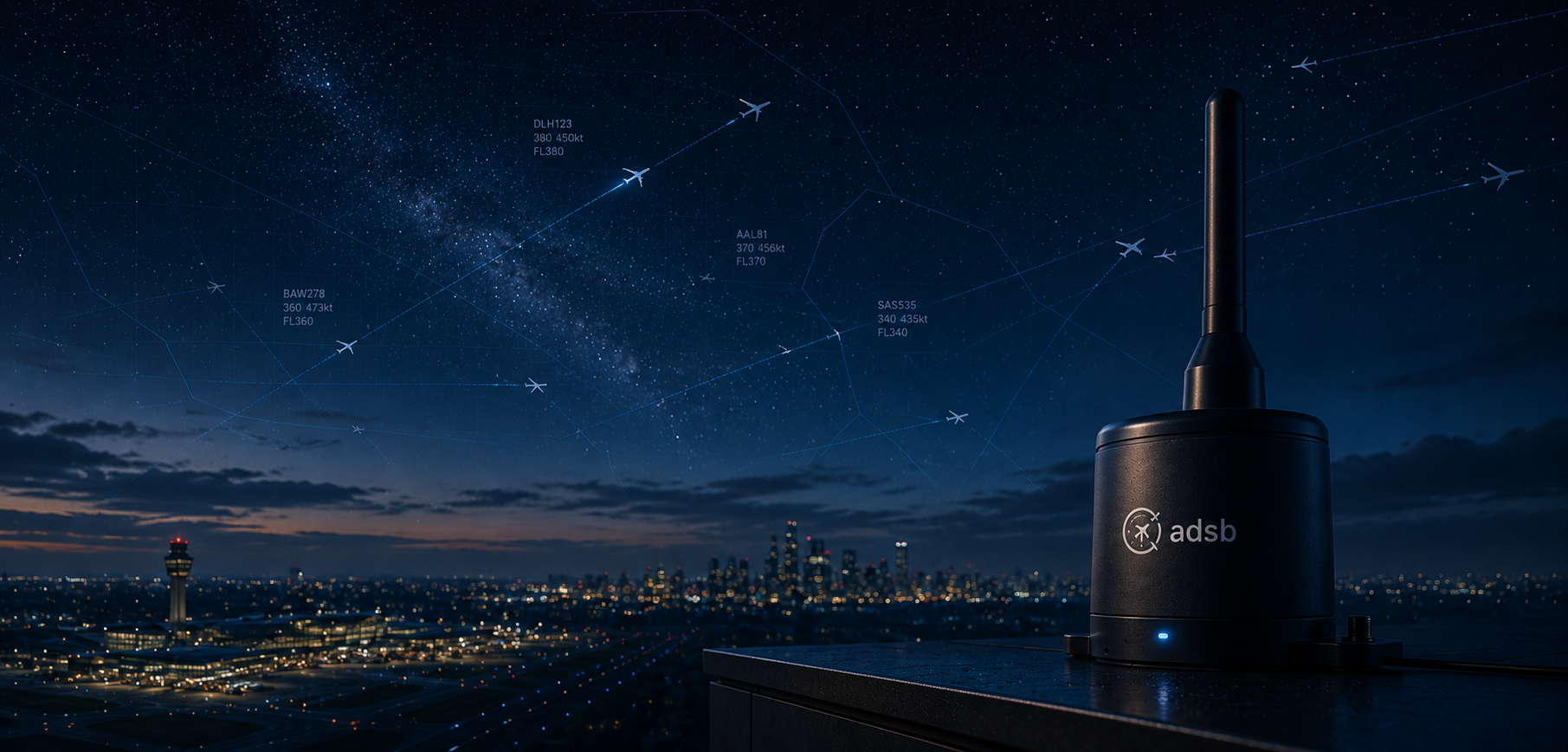
As both an aviation enthusiast and technology professional, I wanted to better understand the aircraft flying above my home in Gloucester, NSW. Rather than relying solely on commercial flight tracking services, I decided to build my own ADS-B receiving station that contributes live aircraft data while giving me complete control over the hardware, software and analytics.
ADS-B Flight Tracking Station
Tracking the Skies in Real Time
As both an aviation enthusiast and technology professional, I wanted to better understand the aircraft flying above my home in Gloucester, NSW. Rather than relying solely on commercial flight tracking services, I decided to build my own ADS-B receiving station that contributes live aircraft data while giving me complete control over the hardware, software and analytics.
The project combines radio frequency engineering, Linux system administration, networking and data visualisation into a reliable, always-on platform capable of tracking hundreds of aircraft every day.
Today, the receiver operates 24/7, providing a live map of aircraft movements across New South Wales and contributing valuable flight data to the global aviation community.
Features
- 24/7 aircraft monitoring
- Live interactive flight map
- Real-time aircraft positions
- Flight history and statistics
- Aircraft identification
- Altitude, speed and heading data
- Custom dashboards and analytics
- Remote monitoring and management
- Automatic software updates
- Global data sharing
The Hardware
The receiving station was designed for maximum reliability and signal performance while operating continuously in an outdoor environment.
The system consists of:
- Raspberry Pi Linux server
- 1090MHz ADS-B SDR receiver
- High-gain outdoor antenna
- Low Noise Amplifier (LNA)
- Quality coaxial feedline
- Weatherproof enclosure
- UPS-backed power protection
- Gigabit Ethernet connectivity
Careful antenna placement and filtering allow the receiver to detect aircraft hundreds of kilometres away under favourable conditions.
Software
The station runs entirely on Linux using open-source aviation software that decodes ADS-B transmissions broadcast by commercial and private aircraft.
The software stack handles:
- Aircraft decoding
- Live mapping
- Historical data storage
- Statistics generation
- System health monitoring
- Automatic backups
- Remote administration
- Public web access
The system also contributes anonymised aircraft position data to community-driven flight tracking networks, helping improve worldwide coverage.
Challenges
Building a reliable ADS-B receiver involved much more than connecting an antenna.
Some of the engineering challenges included:
- Reducing RF interference
- Selecting the optimal antenna location
- Weatherproofing outdoor equipment
- Improving long-range reception
- Minimising signal loss
- Maintaining 24/7 uptime
- Automating monitoring and recovery
- Optimising system performance on low-power hardware
Fine-tuning the installation significantly improved reception range and aircraft tracking performance.
What I Learned
This project brought together several disciplines that I enjoy working across:
- Software Defined Radio (SDR)
- Linux System Administration
- Raspberry Pi
- Networking
- Radio Frequency (RF) Engineering
- Data Visualisation
- Geographic Information Systems (GIS)
- Automation
- Web Development
- Remote Infrastructure Management
It also reinforced the importance of building systems that are both resilient and maintainable, capable of running unattended while still providing detailed monitoring and diagnostics.
Live Flight Map
The receiver publishes a live map that allows visitors to watch aircraft moving across the region in real time. Each aircraft includes detailed telemetry such as callsign, altitude, ground speed, heading, origin, destination (where available), and aircraft type.
Because the station receives broadcasts directly from aircraft overhead, the data represents what is being captured locally rather than being sourced from a third-party API, making it an excellent demonstration of radio communications, embedded systems and real-time data processing.